Vintage Indian Art
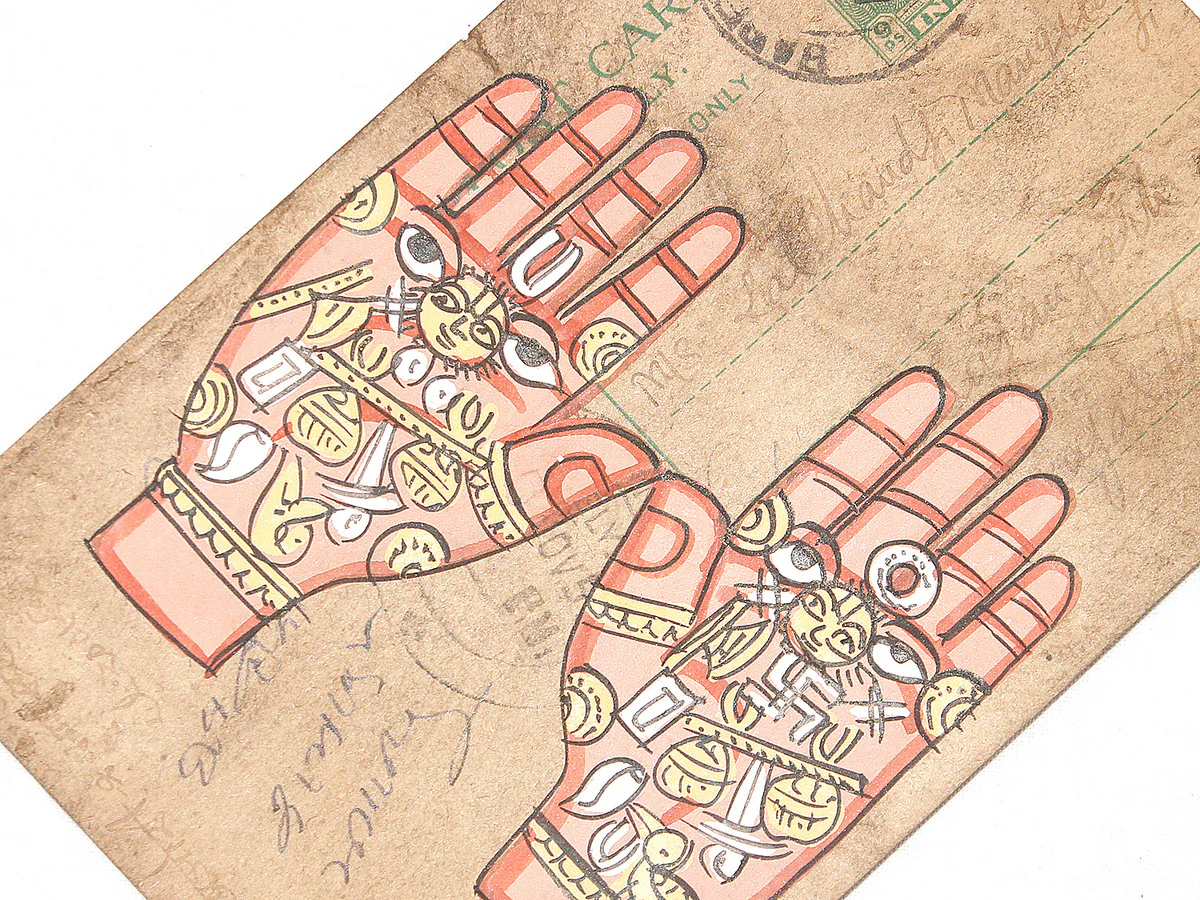
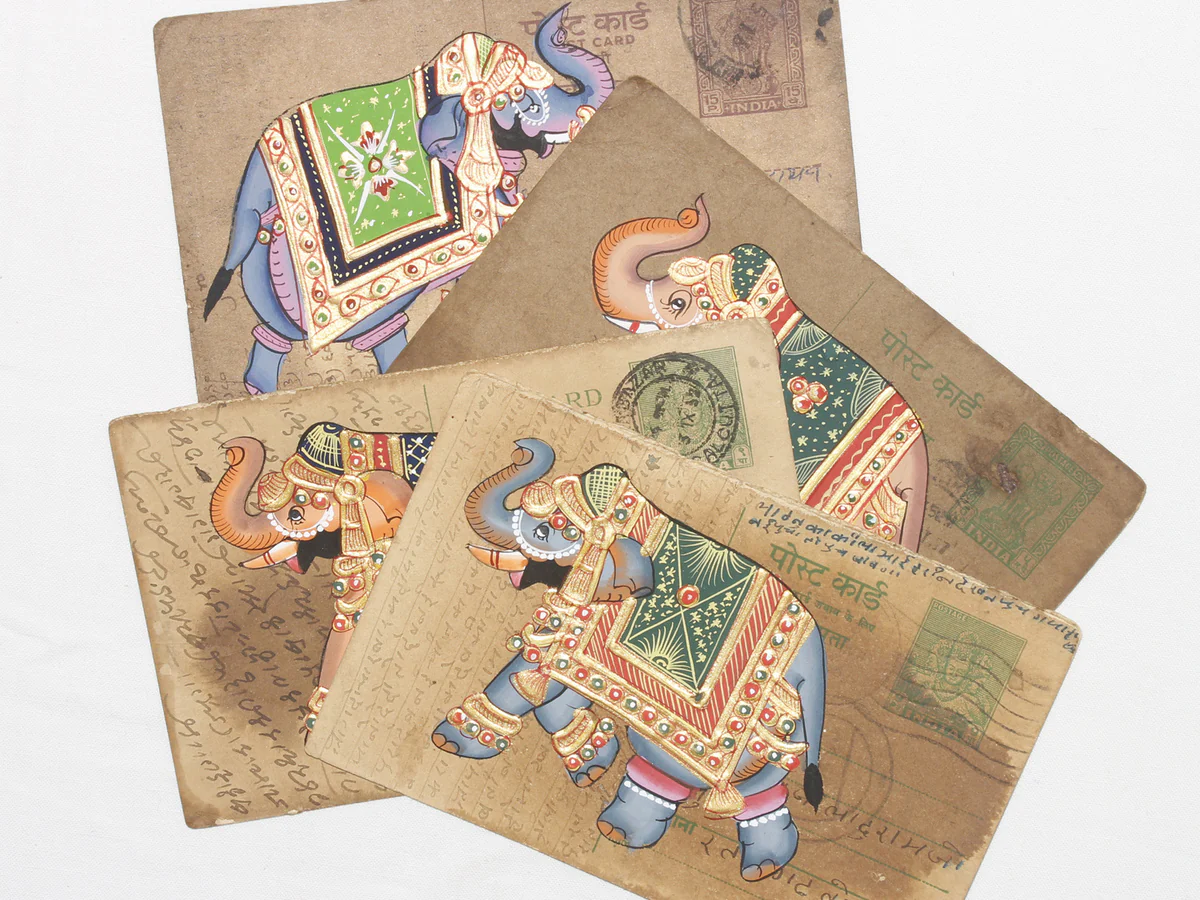
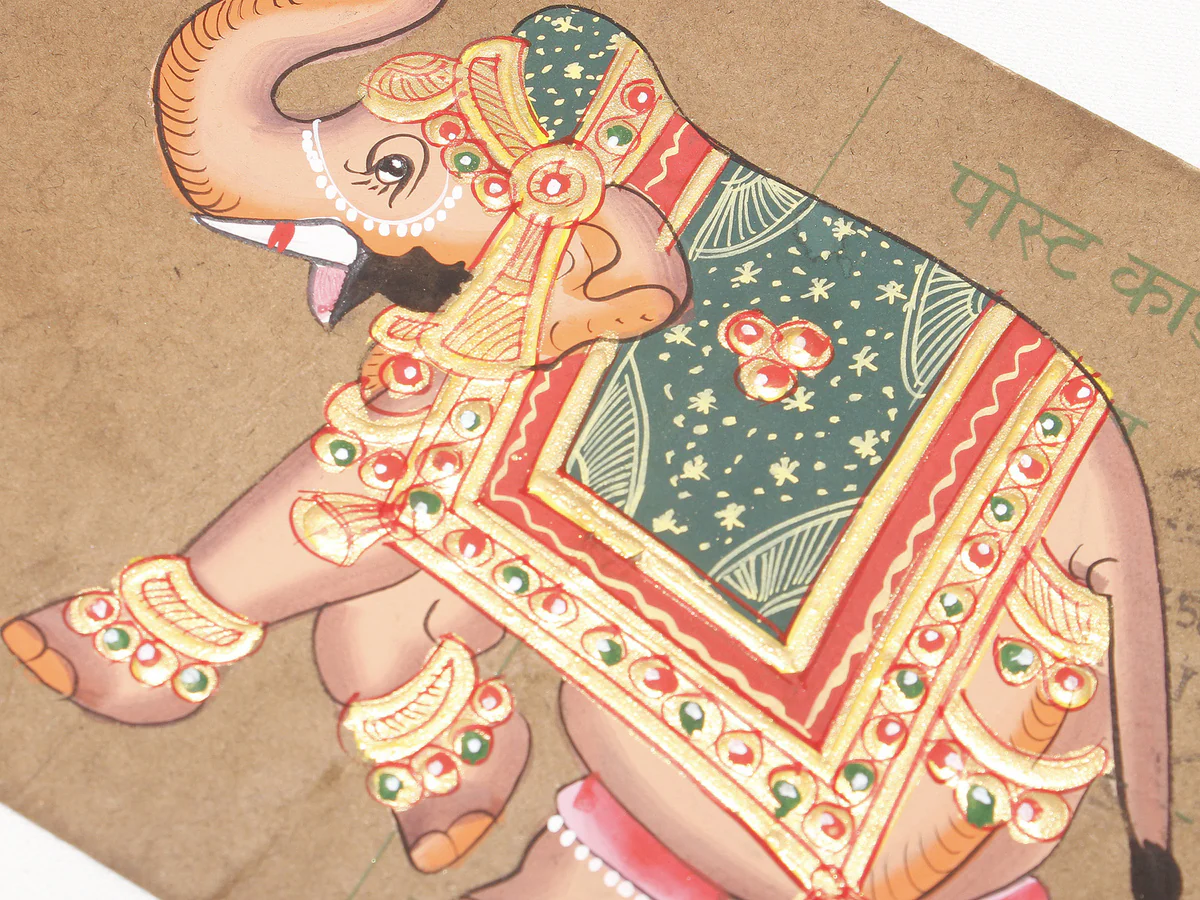
Beautiful original painted Indian art. They are created from paper that has been aged and then painted by a skilled artist in the Mewar (Udaipuri) style of miniature painting. The level of detail is exceptional with some of the elements painted with a single bristle paintbrush.
Select from a Healing Hands, Elegant Elephant, Mischievous Monkeys, Holy Cow, Leaping Lion or Hanuman. Only one piece will be supplied. Please note that each piece is individual and may vary from those shown in the images. We have only 9 available.
Size: W21.5cm x 14cm x H33cm (W8 1⁄2 x H13" approx)
They may have small marks, tears and missing corners on them, which are consistent with their age and original use. We feel these add to their character and appeal. Please look at the photos to get a general idea of their condition.
The background to Indian Miniature painting:
Miniatures are intricate, small, colourful handmade folk paintings, created with very precise and delicate brushwork. The colours used in the miniatures are derived from minerals, vegetables, precious stones, indigo, conch shells, pure gold and silver. Some of the noted miniature schools include those of the Mughals, Rajputs and Deccan.
The paintings recreate historical episodes or tales of mythology in schools that have come to be identified with the different kingdoms that merged in Rajasthan and wider India. Fine brush strokes signify miniatures from Jaipur and Udaipur, the Bundi and Kotah kalams are known for their scenes of battle and of shikar (hunts) while the Kishangarh School does portraits with Radha-Krishna as the principal characters.
Rajput painting evolved and flourished during the 18th century in the royal courts of Rajputana, India. Each Rajput kingdom evolved a distinct style, but with certain common features. Rajput paintings depict a number of themes, events of epics like the Ramayana and the Mahabharata, Krishna’s life, beautiful landscapes, and human figures.
Mughal painting is a particular style, which is generally confined to miniature book illustrations, emerged and developed during the Mughal Empire (16th -19th centuries). Mughal paintings include portraits, events and scenes from royal court life, wildlife and hunting scenes, and illustrations of epic battles. The Victoria and Albert Museum in London has a large and remarkable collection of Mughal paintings.
Today many schools of miniature painting thrive in Rajasthan. These include the Mewar or Udaipur school, the Bundi school, the Kishangarh school, the Bikaner school, the Jaipur school and the Alwar school.
Product Information
Product Information
Shipping & Returns
Shipping & Returns


Vintage Indian Art
Vintage Indian Art
Beautiful original painted Indian art. They are created from paper that has been aged and then painted by a skilled artist in the Mewar (Udaipuri) style of miniature painting. The level of detail is exceptional with some of the elements painted with a single bristle paintbrush.
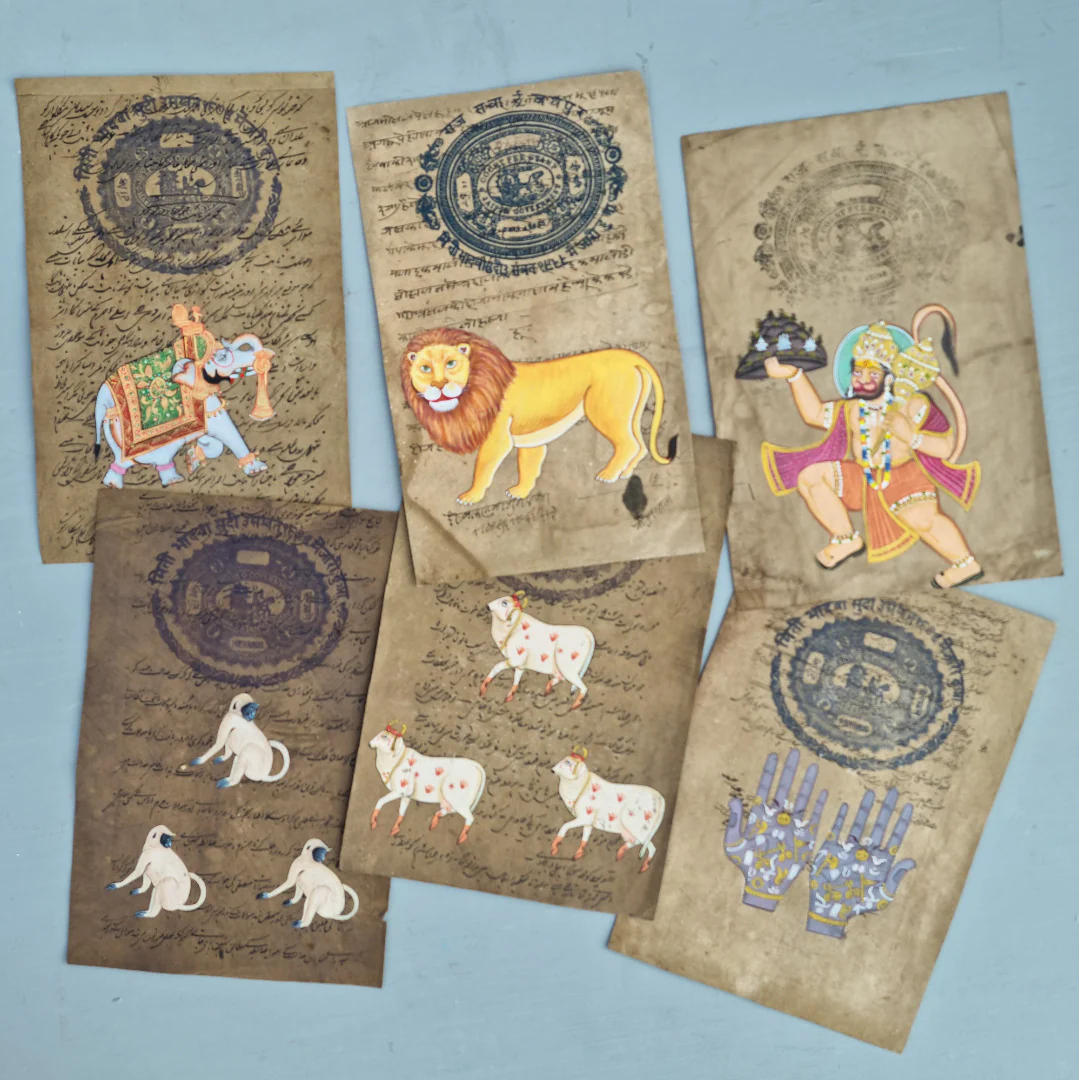
Select from a Healing Hands, Elegant Elephant, Mischievous Monkeys, Holy Cow, Leaping Lion or Hanuman. Only one piece will be supplied. Please note that each piece is individual and may vary from those shown in the images. We have only 9 available.
Size: W21.5cm x 14cm x H33cm (W8 1⁄2 x H13" approx)
They may have small marks, tears and missing corners on them, which are consistent with their age and original use. We feel these add to their character and appeal. Please look at the photos to get a general idea of their condition.
The background to Indian Miniature painting:
Miniatures are intricate, small, colourful handmade folk paintings, created with very precise and delicate brushwork. The colours used in the miniatures are derived from minerals, vegetables, precious stones, indigo, conch shells, pure gold and silver. Some of the noted miniature schools include those of the Mughals, Rajputs and Deccan.
The paintings recreate historical episodes or tales of mythology in schools that have come to be identified with the different kingdoms that merged in Rajasthan and wider India. Fine brush strokes signify miniatures from Jaipur and Udaipur, the Bundi and Kotah kalams are known for their scenes of battle and of shikar (hunts) while the Kishangarh School does portraits with Radha-Krishna as the principal characters.
Rajput painting evolved and flourished during the 18th century in the royal courts of Rajputana, India. Each Rajput kingdom evolved a distinct style, but with certain common features. Rajput paintings depict a number of themes, events of epics like the Ramayana and the Mahabharata, Krishna’s life, beautiful landscapes, and human figures.
Mughal painting is a particular style, which is generally confined to miniature book illustrations, emerged and developed during the Mughal Empire (16th -19th centuries). Mughal paintings include portraits, events and scenes from royal court life, wildlife and hunting scenes, and illustrations of epic battles. The Victoria and Albert Museum in London has a large and remarkable collection of Mughal paintings.
Today many schools of miniature painting thrive in Rajasthan. These include the Mewar or Udaipur school, the Bundi school, the Kishangarh school, the Bikaner school, the Jaipur school and the Alwar school.
Original: $12.00
-70%$12.00
$3.60Product Information
Product Information
Shipping & Returns
Shipping & Returns
Description
Beautiful original painted Indian art. They are created from paper that has been aged and then painted by a skilled artist in the Mewar (Udaipuri) style of miniature painting. The level of detail is exceptional with some of the elements painted with a single bristle paintbrush.
Select from a Healing Hands, Elegant Elephant, Mischievous Monkeys, Holy Cow, Leaping Lion or Hanuman. Only one piece will be supplied. Please note that each piece is individual and may vary from those shown in the images. We have only 9 available.
Size: W21.5cm x 14cm x H33cm (W8 1⁄2 x H13" approx)
They may have small marks, tears and missing corners on them, which are consistent with their age and original use. We feel these add to their character and appeal. Please look at the photos to get a general idea of their condition.
The background to Indian Miniature painting:
Miniatures are intricate, small, colourful handmade folk paintings, created with very precise and delicate brushwork. The colours used in the miniatures are derived from minerals, vegetables, precious stones, indigo, conch shells, pure gold and silver. Some of the noted miniature schools include those of the Mughals, Rajputs and Deccan.
The paintings recreate historical episodes or tales of mythology in schools that have come to be identified with the different kingdoms that merged in Rajasthan and wider India. Fine brush strokes signify miniatures from Jaipur and Udaipur, the Bundi and Kotah kalams are known for their scenes of battle and of shikar (hunts) while the Kishangarh School does portraits with Radha-Krishna as the principal characters.
Rajput painting evolved and flourished during the 18th century in the royal courts of Rajputana, India. Each Rajput kingdom evolved a distinct style, but with certain common features. Rajput paintings depict a number of themes, events of epics like the Ramayana and the Mahabharata, Krishna’s life, beautiful landscapes, and human figures.
Mughal painting is a particular style, which is generally confined to miniature book illustrations, emerged and developed during the Mughal Empire (16th -19th centuries). Mughal paintings include portraits, events and scenes from royal court life, wildlife and hunting scenes, and illustrations of epic battles. The Victoria and Albert Museum in London has a large and remarkable collection of Mughal paintings.
Today many schools of miniature painting thrive in Rajasthan. These include the Mewar or Udaipur school, the Bundi school, the Kishangarh school, the Bikaner school, the Jaipur school and the Alwar school.