Vintage Stacking Chair by PEL - Canvas
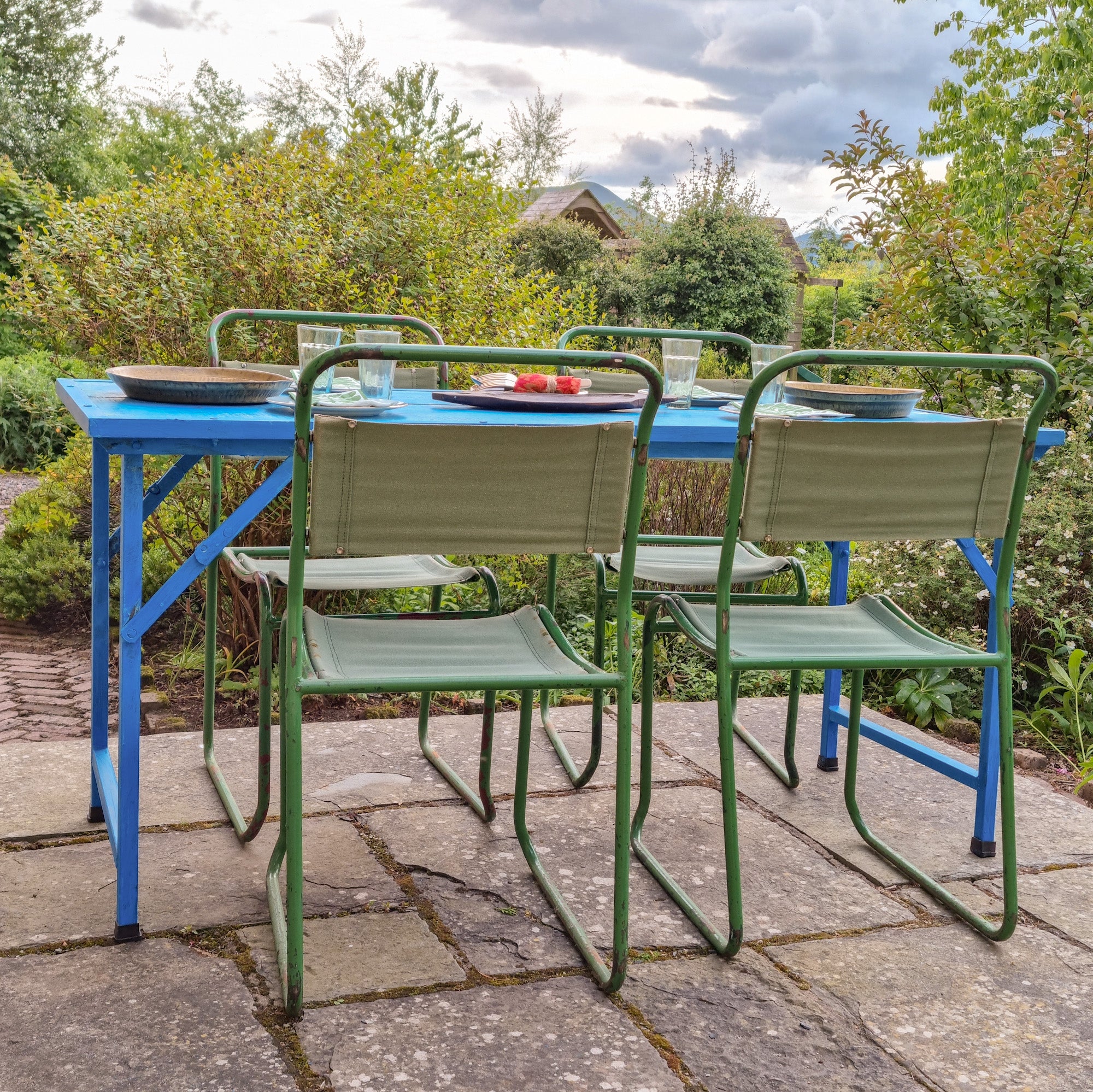
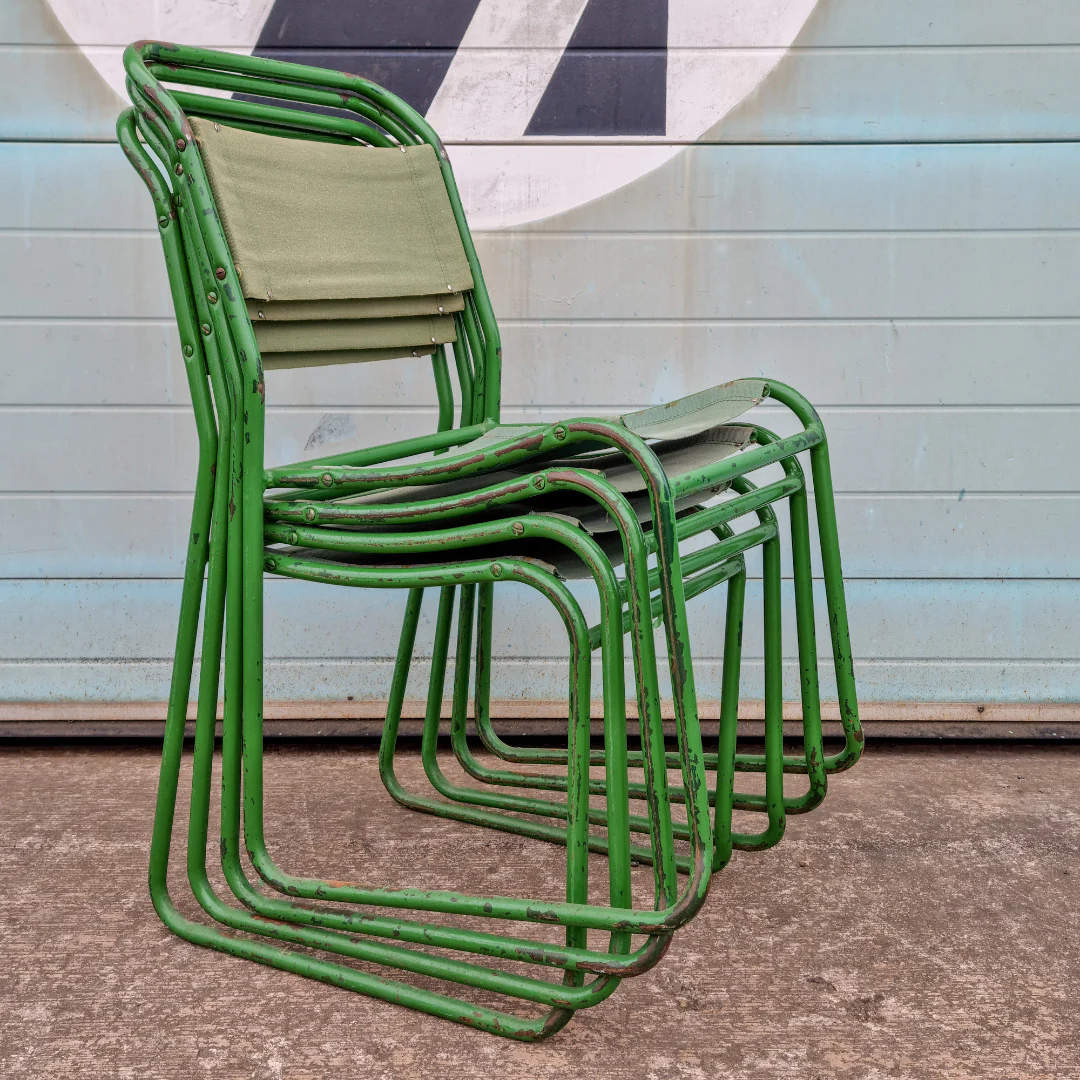
An original 1960s vintage PEL stacking chair with a tubular steel frame and green canvas seat and backrest. Great looking, efficient stacking, extra comfy and super classic. Available with a light green or dark frame. They were salvaged from a Scout hall in Fife, Scotland.
Produced in the modernist tubular style, the green metal frame and seating of these striking chairs is perfect for your vintage or retro-inspired dining room or retro kitchen or garden.
We have a small number of these iconic authentic chairs in their original condition.
Condition report: There is obvious chipped and lost paint to the frames. The canvas is discoloured and there are some small light stains to some seats and backs. The canvas has frayed and shows small rips to where it's attached to the front of the frame. Overall they are in a reasonable, sturdy condition. Where the frames have brushed against the edge of other whilst being stacked there is some scuffing. The frames show signs of light corrosion, particularly along the lowers parts of their legs.
Price is per chair.
Chair size: W45cm x D50 x H85cm. Seat height 43cm
Vintage stacking chairs can come in several styles and be used for a wide variety of purposes. They were used as stacking school chairs, tubular framed chairs, hall chairs, church chairs, community hall chairs and office chairs.
As these chairs stacked on top of each other they took up less room so we're perfect for businesses with limited storage capacities.
First introduced by PEL in 1932 and designed by Bruno Pollock in 1931, the first stacking chair had a grey tubular steel frame which was enamelled. The seat and backs were made from a red canvas.
Their use was widespread in schools, church halls, meeting and hospitals just before WWII and mass-produced in larger quantities after the war as low-cost bent plywood became available and there was greater availability of steel and iron. Their fabrication was not limited to just PEL. Nest-A-Bye, Remploy, Bamco, Cox, and Remploy also started to make similar curved tubular steel designed chairs with a bent plywood seat and backrest in the 1940s, 1950s and 1960s.
Now with their stylish mid-century curves and natural wood and nod to their industrial heritage vintage stacking chairs have made a come-back and can be seen everywhere from dining rooms to offices to restaurants and bars.
Our retro and vintage dining/school chairs are not new or made to look old. They may have small marks and scratches on them, which are consistent with their age and original use. We feel these add to their character and appeal. Please look at the photos to get an idea of their condition.
Product Information
Product Information
Shipping & Returns
Shipping & Returns




Vintage Stacking Chair by PEL - Canvas
Vintage Stacking Chair by PEL - Canvas
An original 1960s vintage PEL stacking chair with a tubular steel frame and green canvas seat and backrest. Great looking, efficient stacking, extra comfy and super classic. Available with a light green or dark frame. They were salvaged from a Scout hall in Fife, Scotland.
Produced in the modernist tubular style, the green metal frame and seating of these striking chairs is perfect for your vintage or retro-inspired dining room or retro kitchen or garden.
We have a small number of these iconic authentic chairs in their original condition.
Condition report: There is obvious chipped and lost paint to the frames. The canvas is discoloured and there are some small light stains to some seats and backs. The canvas has frayed and shows small rips to where it's attached to the front of the frame. Overall they are in a reasonable, sturdy condition. Where the frames have brushed against the edge of other whilst being stacked there is some scuffing. The frames show signs of light corrosion, particularly along the lowers parts of their legs.
Price is per chair.
Chair size: W45cm x D50 x H85cm. Seat height 43cm
Vintage stacking chairs can come in several styles and be used for a wide variety of purposes. They were used as stacking school chairs, tubular framed chairs, hall chairs, church chairs, community hall chairs and office chairs.
As these chairs stacked on top of each other they took up less room so we're perfect for businesses with limited storage capacities.
First introduced by PEL in 1932 and designed by Bruno Pollock in 1931, the first stacking chair had a grey tubular steel frame which was enamelled. The seat and backs were made from a red canvas.
Their use was widespread in schools, church halls, meeting and hospitals just before WWII and mass-produced in larger quantities after the war as low-cost bent plywood became available and there was greater availability of steel and iron. Their fabrication was not limited to just PEL. Nest-A-Bye, Remploy, Bamco, Cox, and Remploy also started to make similar curved tubular steel designed chairs with a bent plywood seat and backrest in the 1940s, 1950s and 1960s.
Now with their stylish mid-century curves and natural wood and nod to their industrial heritage vintage stacking chairs have made a come-back and can be seen everywhere from dining rooms to offices to restaurants and bars.
Our retro and vintage dining/school chairs are not new or made to look old. They may have small marks and scratches on them, which are consistent with their age and original use. We feel these add to their character and appeal. Please look at the photos to get an idea of their condition.
Original: $49.00
-70%$49.00
$14.70Product Information
Product Information
Shipping & Returns
Shipping & Returns
Description
An original 1960s vintage PEL stacking chair with a tubular steel frame and green canvas seat and backrest. Great looking, efficient stacking, extra comfy and super classic. Available with a light green or dark frame. They were salvaged from a Scout hall in Fife, Scotland.
Produced in the modernist tubular style, the green metal frame and seating of these striking chairs is perfect for your vintage or retro-inspired dining room or retro kitchen or garden.
We have a small number of these iconic authentic chairs in their original condition.
Condition report: There is obvious chipped and lost paint to the frames. The canvas is discoloured and there are some small light stains to some seats and backs. The canvas has frayed and shows small rips to where it's attached to the front of the frame. Overall they are in a reasonable, sturdy condition. Where the frames have brushed against the edge of other whilst being stacked there is some scuffing. The frames show signs of light corrosion, particularly along the lowers parts of their legs.
Price is per chair.
Chair size: W45cm x D50 x H85cm. Seat height 43cm
Vintage stacking chairs can come in several styles and be used for a wide variety of purposes. They were used as stacking school chairs, tubular framed chairs, hall chairs, church chairs, community hall chairs and office chairs.
As these chairs stacked on top of each other they took up less room so we're perfect for businesses with limited storage capacities.
First introduced by PEL in 1932 and designed by Bruno Pollock in 1931, the first stacking chair had a grey tubular steel frame which was enamelled. The seat and backs were made from a red canvas.
Their use was widespread in schools, church halls, meeting and hospitals just before WWII and mass-produced in larger quantities after the war as low-cost bent plywood became available and there was greater availability of steel and iron. Their fabrication was not limited to just PEL. Nest-A-Bye, Remploy, Bamco, Cox, and Remploy also started to make similar curved tubular steel designed chairs with a bent plywood seat and backrest in the 1940s, 1950s and 1960s.
Now with their stylish mid-century curves and natural wood and nod to their industrial heritage vintage stacking chairs have made a come-back and can be seen everywhere from dining rooms to offices to restaurants and bars.
Our retro and vintage dining/school chairs are not new or made to look old. They may have small marks and scratches on them, which are consistent with their age and original use. We feel these add to their character and appeal. Please look at the photos to get an idea of their condition.